You’ve Been Hit By Ransomware… What Should You Do Now?
If your company has suffered a ransomware attack, it’s important to act fast to limit the damage and remediate the situation in order to minimize losses.
Even if you have avoided ransomware in the past, it’s important to formulate a disaster recovery plan if you do get hit in the future.
A solid security stack can go a long way to prevent ransomware and other data breaches. With tools like AI antivirus and best-in-class security options, Facet customers have peace of mind knowing they have greater protection.
Continue reading to see the steps you should take if you are the victim of a ransomware attack.
If you have an IT provider, contact them immediately.
If you have a managed services agreement, contact your provider quickly. They may be able to take steps that limit the damage and restore a backup of your data so you can get back to operations as normal. This normally includes quickly taking your network offline at the switch level.
This is the first and most important step to take if your organization is hit by ransomware. This can prevent further damage done to your system if the malware has not yet spread fully. Understand that if your computers are networked, there is a chance that more than one device is affected.
If you don’t have an IT provider, contact a local firm specializing in ransomware recovery.
If you do not currently have an IT provider, call a local firm that specializes in ransomware recovery. At Facet, we provide ransomware response services to companies in Peoria and the surrounding areas. The faster you contact us, the better. Ransomware is a time-sensitive issue because a quick response can minimize losses for your company.
Do not immediately pay the ransom.
The FBI and other government agencies do not recommend paying the ransom in an attempt to get your data back. This can even be considered illegal. Often, the hackers will further extort you for money after returning partial data. We have also seen trends lately of hackers trying to demand more money to keep sensitive customer data private. In most cases, it is best to minimize interactions with the hackers and not pay the ransom.
Report the breach to the authorities.
The FBI’s cyber crimes unit tracks ransomware attacks on individuals as well as businesses in the U.S. and uses the information to compile reports and fight further attacks. If you have a breach, it’s important to submit a report about the incident.
Work with your IT provider to restore backups and remove any malware from your systems.
Once you’ve called in a professional IT provider specializing in ransomware recovery, you may need to provide information on your systems and networks to them so they can get your networks up and running again in a timely manner.
Inform your clients and stakeholders.
For liability reasons, you must inform your clients and stakeholders as soon as you can do so safely. While it’s a difficult thing to do, it is both the ethical choice and can protect you and your clients.
Take preventative action to stop future attacks.
There are steps you can take as a company to prevent future attacks, especially attacks via email. Regular phishing simulations have been proven to help immensely with email hacks, for example. Talk with an IT provider in Peoria like Facet Technologies to learn more ways that you can harden your business against attacks and hacks. We have solutions like AI antivirus, dark web monitoring, and email filtering that can keep your employees safer and protect your profitability. You may also look into a solution like a 24/7 security operations center (SOC) that keeps eyes on your network at all times.
Remember that ransomware attacks happen to businesses of all sizes and are an incredibly common occurrence. With the right response, your business can come out of an attack stronger and more resilient against future incidents.
Facet Technologies provides IT and managed services to over 5,000 businesses across the US and Canada. With our Peoria, IL-based team, we respond to ransomware incidents and help businesses restore data and prevent further damage to their network.
Facet’s managed services clients are protected with a security suite designed to prevent attacks and breaches. We also offer free employee training videos and phishing simulations that have been proven to reduce the risk of data breaches.
Do you need help with ransomware attack cleanup, or would you like more information on our managed security offerings? Contact us via phone at (309) 689-3900 or fill out the contact form below.
Facebook tracks its users’ activity across the web. Here’s how to stop it.
Among security experts, there’s a common refrain about social media services: “If it’s free, you’re paying with your data.”
You likely already know that Facebook uses cookies to follow its users around the web and collects information about their browsing habits, shopping preferences, and more. This data is used to serve users ads more effectively.
But did you know that you can control this tracking activity? In 2019, Facebook added an opt-out option for tracking outside of Facebook. With it, you can clear past information from outside apps and websites and control how much they can see in the future.
Here’s how to find this setting and turn the trackers off.
From your Facebook homepage, go to:
“Settings and Privacy”
“Settings”
“Off-Facebook Activity”
Once you get to the Off-Facebook activity page, you can choose to clear your history and turn off future activity for your account. You can also control the apps for which you want to allow account access (useful for services such as Spotify, Pinterest, or other apps that you login to via Facebook).
Keep in mind that Facebook will continue to prompt you periodically to turn this setting back on, mostly when you connect a new 3rd-party app or website to your account using your Facebook login credentials.
While you can never fully control your data on a free social media network like Facebook, being security savvy can help protect your privacy on the web.
IT documentation is a powerful force when it comes to your business network and overall operations. Done well, it can mean less downtime and interruptions. Done poorly or not at all, it can cost your business dearly in the form of lost work and more.
Most businesses, however, still don’t have proper documentation in place.
What replaces a good documentation system?
In many small businesses, one person holds all or most of the IT knowledge. For businesses with IT teams, each person may be able to fix specific problems, but don’t have a good way to share their processes with the others on the team.
Clearly, this method leads to more downtime in emergency situations. The solution? Good documentation. A shift from individual knowledge to common knowledge helps businesses tackle annoying recurring IT problems.
One common refrain from proponents of good documentation practices is that brain matter is not a cheap or effective storage solution. In urgent situations, it can take time to track a person down. People take sick days or go on vacation, and sometimes take jobs at other companies. Having processes and procedures in place when this happens can be the difference between a smooth workday and total shutdown.
What is network documentation?
Network documentation is a collection of information about your entire network and all the devices connected to it. This can include hardware information, software information, passwords, internet information, and processes and procedures.
Who needs network documentation?
Oftentimes, small business owners consider network documentation to only be necessary for large companies and organizations. In truth, it’s equally important for small businesses, even with smaller, less complex networks to maintain documentation.
How can documentation save my company money?
In short, documentation means less time wasted. Whether you are a small company or a larger business with an IT team, having processes and important information recorded means you are no longer searching for that stray password, hardware specification, or other information to complete a task, or trying to find the one person who knows the information. This can save hours of downtime in an emergency!
If you are a Facet managed services client, we maintain change logs and other important documentation for you. One major advantage of choosing managed services over a break-fix “as-needed” approach to IT is the speed at which problems can be resolved. Because we already have documentation and have tracked all the changes made to your network, our technicians can solve tricky issues faster than going in blind.
What should I do if I don’t have documentation?
If your business has little or no documentation for your IT practices, now is the time to make a change to prevent downtime in the future.
Most networks, even in small businesses, are more complicated than they may appear on the surface. Does your business use only on-site servers and data backups, or are their cloud components as well (remember that we always advocate having multiple backups, and at least one in the cloud, in case of disaster)? What are the hardware specifications of each component? What software is running on which workstations, and is it cloud based, installed locally, or both?
This information should be stored securely in IT documentation software for future reference and must be updated regularly.
Facet maintains documentation for all our managed services clients, large and small. This allows us to provide quick and responsive service to our customers and provide information to them as they need it. This also allows for any changes or work on the network to be tracked.
Network Documentation Services: Need a Hand?
If you are a small business owner, you are likely too busy to take on yet another project like network documentation.
If you have an in-house IT team, or are an IT leader at an organization, your team may be too busy with other projects and pressing demands to begin a documentation project.
Facet can help. We maintain network documentation for our managed services and co-managed services clients as part of our world-class IT service. This helps us provide a higher level of service to our customers, 24/7/365. Starting from scratch? Trust the Facet team to build your network documentation the right way to prepare for the future. Contact us today to learn more about managed services and IT documentation projects for your business.
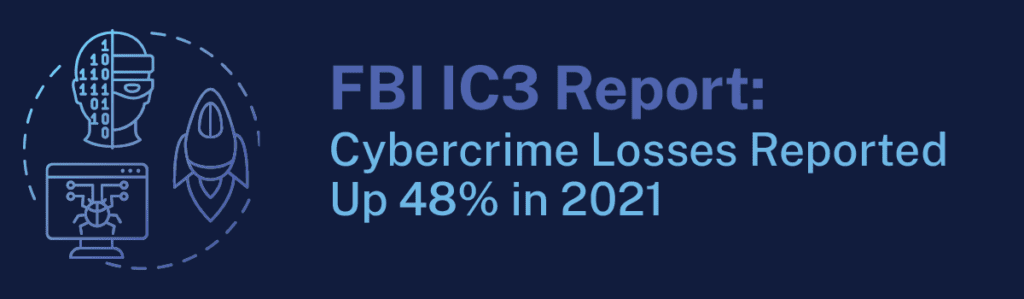
The dark web could now be considered the world’s third largest economy, with experts estimating that cybercrime brought in over $6 trillion in 2021, according to the FBI’s annual Internet Crime Report, which documents cybercrime trends. The Bureau recorded 847,376 complaints from businesses and consumers, and over $6.9 billion in losses from the U.S. alone, a 48% increase from 2020.
How did such an increase happen? For one thing, it’s gotten easier to hire out cybercrime. Previously the purview of criminals with coding and technical skills, the booming cybercrime-as-a-service market means that nearly anyone can buy the tools to ransom data, install malware, steal information, and conduct other illicit cybercrime activities, without any special skills.
As it becomes easier for cybercriminals and crime groups to take advantage of businesses and consumers worldwide, your business’s security strategy matters more than ever. Start with a security assessment from Facet to see where you stand and the actions you can take as a business leader to protect your company and your future.
It may sound simple, but pressing the Windows Key+L when you step away from your computer can save your business from serious security threats.
Although phishing emails and other “virtual” scams make up the bulk of cybercrime activity, some hackers will try to physically access a computer on a company’s network to steal data. This tip is especially important if you have computers in a public area.
On a Windows PC, pressing the Windows Key+L will lock your PC and take you to the sign-in page. On a Mac, Ctrl-Cmd-Q will do the trick and lock your device.
Like many things, virtually locking up your devices is part of building a vigilant security culture within your organization.
Does your organization need help making a game plan for cyber resilience? Facet offers free cybersecurity assessments for businesses! You will receive valuable information about your company’s current security and know where you can improve to prevent breaches and attacks.
Do your employees use sites like Dropbox, Google Drive, and other personal cloud sharing services to collaborate and work on projects and tasks? If so, you could unknowingly be exposing yourself to huge financial losses.
“Shadow IT” is the practice of using programs and websites for work activities without the knowledge or approval of the organization’s IT provider or IT department. While this is an “older” term, the practice has become increasingly common as file sharing sites grow in popularity and upload speeds quicken.
Software like Dropbox and Google Drive can help your team collaborate and work together easier, especially at a time when many companies are choosing a work-from-home or hybrid approach for their employees. However, it’s important to weigh your options and acknowledge the risks of using these tools.
If one of your employees quit without notice today, or had to be terminated unexpectedly, would you know where all their important work documents are stored? Would they be on their workstation, a cloud solution your IT team set up, or dispersed on the employee’s personal file storage accounts?
It’s important to ask these questions because a situation like this will almost certainly happen at some point to every business. If important files are on an employee’s personal storage, they can walk away with customer data and other valuable information.
Not only does this open you up to the threat of a disgruntled employee taking customer data or other documents to a competitor, it also means that if their personal cloud storage is hacked, your data is as good as gone.
If you work in a regulated industry like healthcare, insurance, or finance, you especially need to be on the lookout for shadow IT programs. Doing your due diligence and putting in proper security and IT practices can save you from costly data privacy lawsuits in the future should you be audited.
As a business owner, how can you set your team up for success and avoid these pitfalls?
The first step is to make sure that your IT firm or IT department is monitoring downloads and new software installations on company equipment as part of routine security practices. If you aren’t sure if your current provider does this for you, ask them. From here, you can choose to block or allow certain sites and downloads at the firewall level.
Additionally, offer your employees a better way to work collaboratively with cloud sharing programs made specifically for businesses. These programs allow employees to store work files for themselves and share documents and information within the organization. Call Facet today and ask for more information on options for secure work on the cloud.
Questions About Cybersecurity and Other IT Issues? We can help!
This month’s recipe is from Facet’s Customer Advocate, Nick Baker!
Nick says these crepes are “debatably my favorite food ever.” His recipe for authentic French crepes can be customized with a wide variety of savory and sweet ingredients for a different flavor every time you make them.
This recipe is also available on the blog.
French Crepes
Ingredients 2 eggs 1/4 cup butter, melted 2 1/2 tbsp sugar 1/2 cup all-purpose flour 1/2 cup milk 1/8 cup water 1/2 tsp vanilla dash of salt
Whisk all the ingredients, except the flour, together. Add in the flour, a little bit at a time, whisking just until the flour has been mixed in.
Let the crepe batter rest for a few minutes. Then, give the batter a quick whisk again before using.
Grease a non-stick, 6″- 8” skillet with unsalted butter and heat over medium heat. Pour about 1/8 cup worth of batter into the pan and tip the pan from side to side to get the batter to spread out throughout the pan. These are a pain to make on a electric stove.
Cook each side of the crepe for 30 seconds before gently loosening up the edges with a spatula. If it lifts, then the crepe is ready to be flipped. If it doesn’t lift up very well, give it 10 to 15 more seconds and try again. Gently lift the crepe out of the pan, then flip over into the pan and cook the other side for another 10 to 15 seconds; remove to cool.
You can experiment with using only egg whites, only yokes, and other combinations depending on your preference. Its also fun to experiment with the flour type depending on ingredients used.
Breakfast Crepe My favorite ingredient is simply honey. Butter Whip cream and strawberries Sometimes I will crack and egg onto the crepe and cook it on the crepe adding cheese and other ingredients available. Then, folding the crepe in to quarters, making it easy to eat with your hands.
Savory Crepe Ham and Cheddar Mozzarella and Pepperoni Be creative