


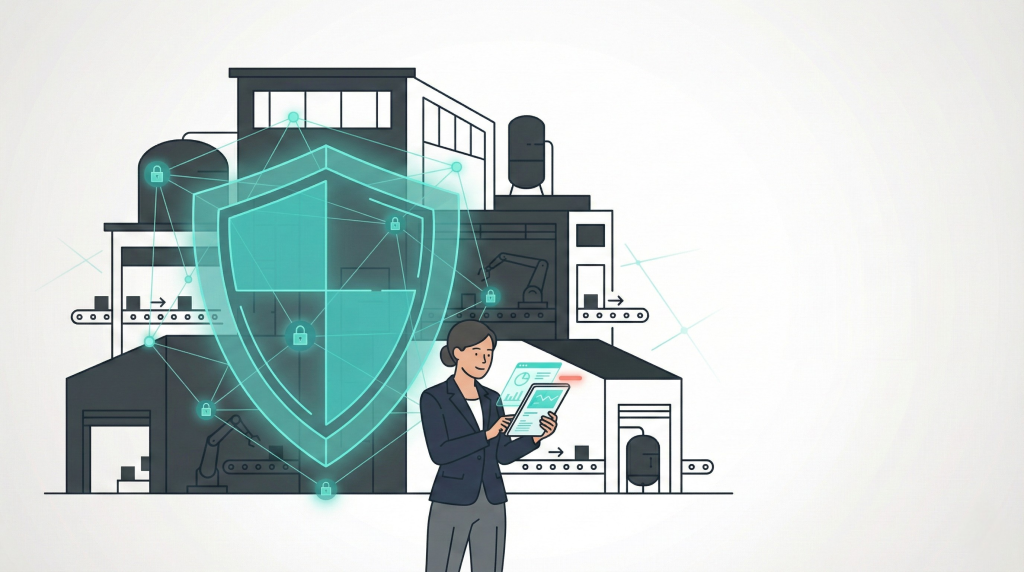
Central Illinois manufacturers face growing cyber threats because they combine high-value intellectual property, operational technology that’s difficult to update, and connections to larger supply chains. Attackers know that production downtime costs manufacturers thousands per hour—making them more likely to pay ransoms or overlook security gaps to keep lines running.
The Numbers Don’t Lie: Manufacturing is the #1 Target
For the fourth consecutive year, manufacturing leads all industries in confirmed cyber attacks. According to recent industry data, manufacturing accounted for 26% of all ransomware incidents in 2024-2025—nearly double the next closest sector.
The reasons are straightforward:
Downtime costs are catastrophic. The IBM 2024 Cost of a Data Breach Report found that unplanned downtime in manufacturing can cost up to $125,000 per hour. When attackers understand that every minute of shutdown bleeds money, they have enormous leverage.
Legacy systems create permanent vulnerabilities. That CNC machine running Windows XP? The PLC installed in 2008? They can’t be patched without risking production stability. Attackers know exactly which systems to target.
Supply chain connections multiply exposure. Your network connects to vendors, suppliers, and customers. One weak link anywhere in that chain becomes everyone’s problem.
The Cybersecurity and Infrastructure Security Agency (CISA) has designated critical manufacturing as a priority sector precisely because attacks here don’t just affect one company—they can disrupt entire supply chains and essential services.
Why Central Illinois Manufacturers Face Unique Risks
Illinois manufacturers—from precision machining shops in Peoria to food processing plants across the region to ag equipment operations throughout Central Illinois—share specific vulnerabilities that make our region particularly attractive to attackers.
The IT/OT Convergence Problem
Historically, factory floor systems (Operational Technology, or OT) operated completely separate from business networks (Information Technology, or IT). That separation provided natural protection—hackers couldn’t reach the production line from the internet.
That wall has crumbled.
Modern manufacturing requires data flowing between shop floor sensors, ERP systems like JobBOSS or SAP, quality control platforms, and business intelligence tools. This convergence creates efficiency but also creates pathways attackers exploit.
A recent Telstra study found that 75% of cyber incidents affecting manufacturing originated from IT systems that connected to OT environments. The attack didn’t start on the production floor—it started in an email inbox and moved laterally until it reached systems that control physical processes.
Multi-Location Networking Headaches
Many Central Illinois manufacturers operate across multiple facilities. A precision machining company might have production in Peoria with secondary operations across the region. Food processors coordinate between production plants, warehouses, and distribution centers.
Each location represents:
- Another potential entry point for attackers
- More network traffic to monitor
- Additional endpoints requiring protection
- Greater complexity in maintaining consistent security policies
Connecting these locations securely—while maintaining the performance manufacturing systems require—demands specialized expertise that generic IT support simply can’t provide.
The “We’re Not Big Enough to Target” Myth
Here’s what Central Illinois business owners need to understand: attackers aren’t looking for the biggest targets. They’re looking for the easiest targets with the most pressure to pay.
A 50-employee machine shop that can’t operate without network access has more incentive to pay a $500,000 ransom than a Fortune 500 company with armies of lawyers and incident response teams. Attackers know this.
The FBI’s Internet Crime Complaint Center reports that manufacturing was the sector most targeted by ransomware complaints, with critical manufacturing receiving the single largest share of CISA’s ICS security advisories—nearly 46% of all industrial control system vulnerabilities disclosed.
What Makes Manufacturing Security Different
Our President, Brian Ford, worked in quality assurance at a large food manufacturer in Bridgeview, IL before leading Facet Technologies. That experience taught him something most IT providers never learn: manufacturing environments can’t operate like traditional office networks.
Uptime Isn’t Optional
In an office, if a server goes down for maintenance, people grumble and work around it. In manufacturing, if the network goes down during a production run, you might be scrapping product, missing shipments, and violating customer contracts.
Security measures must account for this reality. You can’t simply push patches during business hours or reboot systems whenever convenient. Security work must happen around production schedules, during planned maintenance windows, with rollback plans if something goes wrong.
Systems That Can’t Be Replaced
That specialized piece of equipment controlling your production line? It might run software that hasn’t been updated in a decade—because the manufacturer no longer exists, or because an update would require recertifying the entire system.
These legacy systems require different protection strategies:
- Network segmentation that isolates vulnerable systems from the broader network
- Monitoring solutions that detect anomalous behavior without requiring agents on legacy equipment
- Compensating controls that provide security even when the underlying system can’t be patched
Industry-Specific Software Expertise
When your ERP system stops communicating with your shop floor controllers, you need someone who understands both environments. We’ve supported manufacturers running JobBOSS, SAP, and dozens of other industry-specific platforms. When there’s a problem, you don’t want to wait while your IT provider learns your software from scratch.
The Real Cost of Getting This Wrong
Let’s be specific about what’s at stake for Central Illinois manufacturers.
Direct Financial Impact
The average total cost of a ransomware attack in manufacturing reached $5.56 million in 2024—an 18% increase over the previous year. That includes:
- Ransom payments (if made)
- Recovery and restoration costs
- Legal and regulatory expenses
- Lost production during downtime
- Customer compensation for missed deliveries
But averages don’t tell the full story. A Comparitech analysis found that ransomware has cost the manufacturing sector an estimated $17 billion in downtime since 2018, with each day of downtime costing an average of $1.9 million.
Operational Consequences
Beyond the financial hit:
Production delays cascade. When your systems go down, your customers’ production schedules are affected. That damages relationships you’ve spent years building.
Quality control suffers. If you can’t access testing records, quality management systems, or calibration data, you may not be able to certify that products meet specifications.
Recovery takes longer than you expect. The average time to identify and contain a breach in industrial organizations is 272 days—199 days to identify the breach, another 73 days to contain it. That’s nearly nine months of compromised operations.
Insurance and Compliance Complications
Cyber insurance carriers have dramatically tightened requirements for manufacturing companies. Many now require:
- Multi-factor authentication on all remote access
- Endpoint detection and response on all systems
- Regular security awareness training with documented completion
- Incident response plans tested within the past year
If you can’t demonstrate these controls, you may face higher premiums, coverage exclusions, or inability to get coverage at all.
For manufacturers working with government contracts, the stakes are even higher. CMMC (Cybersecurity Maturity Model Certification) requirements are expanding, and demonstrating compliance is becoming a competitive requirement, not just a nice-to-have.
What Actually Works: A Practical Approach
After 30+ years supporting Central Illinois manufacturers, we’ve learned what works in real production environments—not just what looks good on paper.
Start with Visibility
You can’t protect what you can’t see. Before implementing any security measures, you need a complete picture of:
- Every device on your network (including those aging PLCs and HMIs)
- How systems communicate with each other
- Where IT and OT networks connect
- What data flows between systems
This isn’t a one-time project. Networks change constantly as equipment is added, software is updated, and business requirements evolve. 24/7 monitoring provides continuous visibility into what’s happening on your network.
Segment Everything That Can Be Segmented
NIST Special Publication 800-82—the authoritative guide for securing industrial control systems—emphasizes network segmentation as a primary defense strategy. The concept is simple: if an attacker compromises one system, proper segmentation prevents them from reaching everything else.
For manufacturers, this typically means:
- Separating business networks from production networks
- Creating zones within production environments based on criticality
- Controlling and monitoring all traffic between zones
- Isolating legacy systems that can’t be secured through other means
Train Your People (Seriously)
Research shows that regular security awareness training can reduce phishing susceptibility from 60% to 10% over 12 months. Since email remains the most common attack vector, this single investment provides dramatic risk reduction.
But generic training doesn’t work for manufacturing environments. Your team needs to understand:
- How attackers specifically target manufacturing
- What social engineering looks like in an industrial context
- Why USB drives in production environments are dangerous
- How to report suspicious activity without fear of blame
We conduct regular phishing simulations for our managed services clients because testing in realistic conditions reveals vulnerabilities that classroom training misses.
Plan for When (Not If) Something Goes Wrong
Every manufacturer should have documented answers to these questions:
- Who has authority to shut down production systems during an incident?
- How do we continue operating if primary systems are unavailable?
- What’s our communication plan for customers, employees, and regulators?
- Where are our backup systems, and when were they last tested?
The CISA Cybersecurity Strategic Plan emphasizes that organizations should assume breaches will occur and focus on rapid detection and recovery. For manufacturers, this means testing backup and recovery procedures specifically for production systems—not just office data.
Get Response Time That Manufacturing Demands
When your network goes down at 2 AM during a critical production run, you need help immediately—not after business hours resume.
Our Security Operations Center service provides 24/7 monitoring with threats resolved within nine minutes. That’s the kind of response time manufacturing environments require.
Choosing an IT Partner Who Understands Manufacturing
If you’re evaluating IT providers, here’s what to look for:
Do They Know Your Industry?
Ask about their manufacturing clients. What ERP systems have they supported? Have they dealt with OT/IT convergence challenges? Do they understand why you can’t just reboot the production server during the day shift?
At Facet, we work with manufacturers across Central Illinois—from a seasonings and spices manufacturer to precision machining operations specializing in casting, forging, and steel products, to ag product manufacturers throughout the region. We understand the unique demands these environments create.
Can They Handle Multi-Site Complexity?
Networking multiple manufacturing facilities requires more than just running cables and setting up VPNs. It requires understanding traffic patterns, latency requirements, and failover needs specific to manufacturing operations.
We solve multi-location networking challenges regularly. Whether you need to connect production facilities across town or coordinate operations across Central Illinois, we design networks that maintain security without sacrificing the performance your systems require.
Is Their Support Actually Local?
When something goes wrong with a production system, you need someone who can be on-site quickly—not an overseas helpdesk reading from a script.
Our entire team operates from our Peoria headquarters. Our technicians and engineers know Central Illinois manufacturers personally. They understand your systems, your operations, and your business.
Are They Honest About Costs?
Many IT providers quote low monthly rates, then hit you with surprise project fees and hidden costs. That’s not how manufacturing budgeting works—you need predictable IT expenses you can plan around.
We’re transparent about what’s included in our services and what falls outside the agreement. No surprise bills. No unexpected projects. Download our guide: “11 Questions You Must Ask Before Hiring a Managed IT Service Provider” to learn what questions reveal a provider’s true pricing model.
Next Steps for Central Illinois Manufacturers
If you’re a manufacturing company in Central Illinois concerned about cybersecurity—or if you’re simply tired of IT problems disrupting production—here’s what we recommend:
1. Understand your current exposure. What systems are you running? Where do IT and OT networks connect? What legacy equipment can’t be easily secured?
2. Assess your incident response capability. If ransomware hit your operation tonight, what would happen? How long until you’d be back to full production?
3. Evaluate your current IT support. Are they manufacturing specialists, or general IT providers who happen to have you as a client?
We offer a no-obligation consultation where we’ll discuss your specific situation, identify the most pressing risks, and outline what an appropriate security posture looks like for your operation. No pressure, no sales pitch—just honest information from people who understand manufacturing.
Schedule Your Manufacturing IT Consultation →
Or call our Peoria office directly at (309) 689-3900. We’re here Monday through Friday 8 AM-5 PM, with 24/7 emergency support for clients.
Frequently Asked Questions
How much does manufacturing cybersecurity cost?
Costs vary based on network complexity, number of endpoints, and specific compliance requirements. For managed IT services in Central Illinois, expect $100-$200 per workstation monthly. Advanced security services like 24/7 SOC monitoring are additional. We provide transparent pricing with no hidden fees.
Do I need different security for IT and OT systems?
Yes. OT systems prioritize availability and safety over confidentiality—the opposite of traditional IT security. NIST SP 800-82 provides specific guidance for securing industrial control systems differently than business networks.
What’s the first step to improving manufacturing cybersecurity?
Start with visibility. You can’t protect what you can’t see. A comprehensive network assessment identifies all devices, maps connections between systems, and reveals where vulnerabilities exist.
How long does it take to implement proper manufacturing security?
Building a solid security foundation typically takes 3-6 months. This includes assessment, policy development, technology implementation, and staff training. Ongoing monitoring and improvement continue indefinitely.
What if my equipment is too old to secure?
Legacy equipment requires compensating controls—network segmentation, monitoring, access restrictions—that provide protection even when the underlying system can’t be patched. This is common in manufacturing and something we address regularly.
Facet Technologies has been providing IT services to Central Illinois businesses for over 30 years. Our commitment: True Tech Peace of Mind.
📞 (309) 689-3900
3024 W. Lake Ave., Peoria, IL 61615
Ellie Shaw is the Director of Marketing at Facet and the author of Cyber Treats, Facet's biweekly newsletter featuring topics like IT news, cybersecurity updates, compliance advice, and anything tech. She has been a member of the Facet team full-time since 2016 and enjoys finding new ways to share resources and information about cybersecurity with others.